(310) 530-7011 Contact Us

Follow Us

Why Choose Pomegranate Skin Powder for Global Sourcing?

Global buyers are looking more closely at plant-based ingredients, not just their price. Pomegranate Skin Powder offers a practical way to use a valuable fruit fraction that may otherwise be discarded. Its deep reddish-brown color, fine texture, and naturally occurring polyphenols attract interest from food, cosmetic, and nutraceutical manufacturers. However, appearance alone proves very little.

Dr. Navindra P. Seeram, a recognized researcher in pomegranate phytochemistry, described pomegranate as “a rich source of polyphenols.” This scientific perspective supports serious evaluation, but it does not replace supplier verification. Buyers should request the botanical name, country of origin, processing details, certificate of analysis, and current microbiological results. Heavy-metal, pesticide, moisture, and identity testing also deserve attention. Small details matter.

Good Pomegranate Skin Powder should have clear traceability from orchard to finished bag. A reliable supplier can explain harvesting conditions, washing procedures, drying temperatures, grinding methods, and storage controls. These factors influence color, aroma, stability, and batch consistency. Global sourcing also requires practical communication about packaging, documentation, customs requirements, and applicable food or cosmetic standards.

The opportunity is real, but the supply chain is not perfectly uniform. Some specifications remain vague. Some claims sound stronger than the evidence. Buyers should compare samples against written standards rather than trusting attractive brochures. That extra step may slow purchasing, yet it reduces unpleasant surprises later. For responsible sourcing, quality evidence should lead the conversation, while sustainability and commercial value follow closely behind.
Why Choose Pomegranate Skin Powder for Global Sourcing?

What Is Pomegranate Skin Powder?

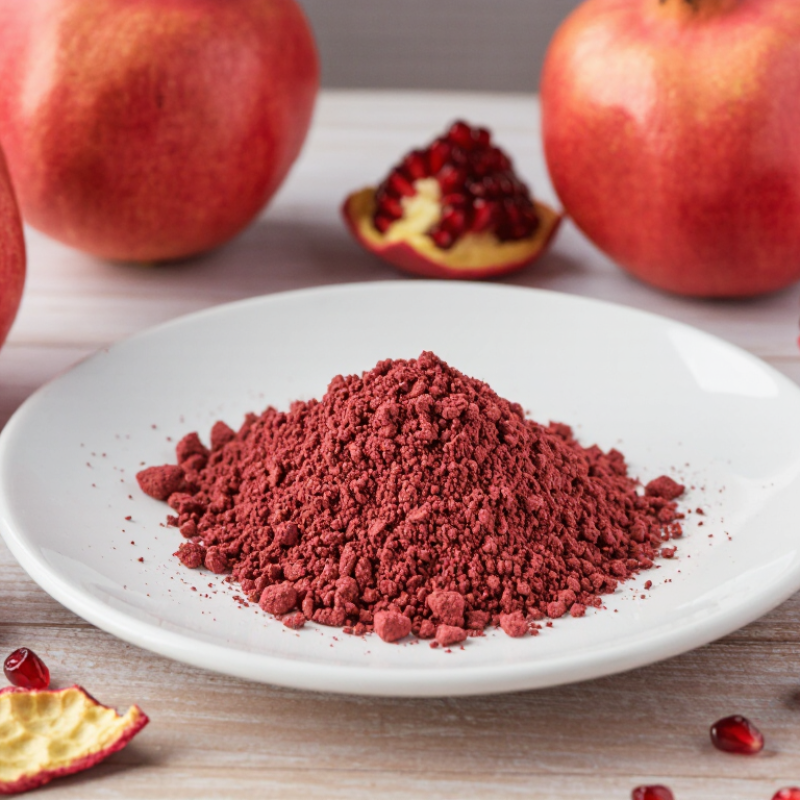
Pomegranate skin powder is made by drying and milling the outer peel of mature pomegranates. It may also contain small amounts of the pale inner membrane. The powder is usually tan, reddish-brown, or deep brown, depending on the fruit and drying method. Its aroma can resemble dried fruit, tea, or mild bitterness.

This material contains dietary fiber, natural pigments, and plant compounds such as tannins and polyphenols. However, composition varies with cultivar, harvest season, processing temperature, and storage conditions. It is not a flawless ingredient. High heat may affect color and sensitive compounds, while poor drying can encourage moisture problems. Practical buyers should request moisture, microbiological, pesticide, and heavy-metal test results. Those documents support safer and more consistent global sourcing.

In food applications, pomegranate skin powder may suit fiber-rich blends, herbal preparations, or natural color experiments, where regulations permit. Cosmetic formulators may assess it for scrubs or botanical powders, but skin compatibility still requires testing. The particle size matters. Fine powder disperses more easily, while coarse powder gives stronger texture. Suppliers should also explain origin, batch coding, packaging, and shelf-life conditions. A clear specification sheet helps compare materials across countries. Yet paperwork alone is not enough. Sampling, sensory checks, and independent laboratory verification can reveal differences that a product description misses.

Why Choose Pomegranate Skin Powder for Global Sourcing?

Pomegranate skin powder is produced by drying and milling the fruit’s outer peel, which is naturally rich in dietary fiber, tannins, and other polyphenolic compounds. The peel is also a substantial fruit fraction, making it a practical upcycling ingredient for food, nutraceutical, cosmetic, and botanical applications.

The chart shows commonly reported approximate mass ranges for major pomegranate fruit fractions. Actual proportions vary with cultivar, growing conditions, maturity, and measurement method. Peel is the source material used to produce pomegranate skin powder.

How Pomegranate Skin Powder Is Produced and Processed

Pomegranate skin powder begins with a useful by-product. FAOSTAT crop data for 2022 placed global pomegranate production above 8 million tonnes. The peel can represent roughly 30% of fruit weight, according to studies published in Food Chemistry. That creates a substantial sourcing opportunity.

Production quality starts at collection. Processors should separate fresh peels from soil, damaged fruit, and foreign materials. Clean water removes juice residues and surface dust. The peels are then inspected manually. Small details matter here.

Drying controls the final powder. Hot-air drying below 60°C can help protect color and phenolic compounds. Some facilities use solar drying, but weather changes can reduce consistency. The dried peel is milled into a controlled particle size. Sieving improves uniformity during blending and packaging.

Testing should follow. Moisture, total plate count, yeast, mold, pesticide residues, and heavy metals require documented checks. Research reviews report strong antioxidant potential from peel polyphenols, but composition changes with cultivar, maturity, and drying temperature. Do not assume every batch performs alike. That is a common sourcing mistake.

A reliable supplier should provide batch records, origin details, processing temperatures, and laboratory results. Traceability connects the orchard to the finished powder. Yet no process is perfect. Storage humidity, oxygen exposure, and long transport can still affect quality. Global buyers should request retained samples and verify results independently before signing larger contracts.

Key Nutrients and Functional Properties

Why Choose Pomegranate Skin Powder for Global Sourcing?

Pomegranate skin powder attracts global buyers because it combines nutritional value with useful processing properties. The skin contains polyphenols, including ellagitannins, flavonoids, and other antioxidant compounds. It also provides dietary fiber and small amounts of naturally occurring minerals. However, nutrient levels can vary with fruit variety, harvest conditions, drying temperature, and grinding methods. Testing matters.

In practical formulation work, the powder can support antioxidant-focused foods, botanical blends, and functional ingredient systems. Its fine texture may improve fiber content and create a warm reddish-brown color.

The powder also contains tannins, which can contribute to an astringent taste. That effect may require careful dosage or flavor balancing. Not every application will suit it.

A reliable sourcing process should examine moisture, particle size, microbial limits, pesticide residues, heavy metals, and ingredient identity. Suppliers should provide batch-based laboratory documents rather than broad marketing claims. Low-temperature drying may help protect sensitive compounds, although it can raise processing costs. The powder is not a perfect ingredient. Its taste, color, and composition need realistic evaluation before commercial adoption. Trial batches often reveal problems that specifications miss. Product developers should compare multiple harvests and storage conditions, because performance may change over time. Clean packaging and controlled humidity are also important for preserving quality during international transport.

Global Sourcing Standards and Quality Considerations

Global sourcing of pomegranate skin powder demands more than an attractive price. The raw material should have clear botanical identification, harvest records, and lot-level traceability. Codex Alimentarius General Principles of Food Hygiene, revised in 2022, supports hazard-based controls from farm handling to final packing. Suppliers should document washing, drying temperatures, milling conditions, and foreign-matter controls. A clean process matters.

Quality testing must match the powder’s intended use. Moisture and water activity help control mold during storage. Microbiological testing should cover total plate count, yeast, mold, Salmonella, and Escherichia coli. Mycotoxins, pesticide residues, and heavy metals also require risk-based screening. EFSA’s 2022 pesticide monitoring report assessed 110,829 food samples, with 96.3% within legal limits. This figure supports routine verification, not blind acceptance. One certificate proves little.

Buyers should request a current certificate of analysis, validated test methods, sampling procedures, and production-site audit records. Polyphenol results need an explained method, such as HPLC, because extraction conditions can change the number significantly. Packaging should be food-grade, sealed, moisture-resistant, and marked with batch and expiry information. During receiving, inspect odor, color, clumping, and sieve consistency. A low price may reflect thinner testing. Sometimes, it hides weak traceability. WHO estimates that contaminated food causes about 600 million illnesses annually worldwide, showing why supplier qualification cannot rely on paperwork alone.

Applications, Packaging, and Supply Chain Advantages

Pomegranate skin powder is gaining attention as a practical ingredient for global sourcing. It can support cosmetic, botanical, and selected food applications. In personal care, formulators may use it in masks, cleansing powders, soaps, and exfoliating blends. Its natural polyphenol content can add marketing value, but performance depends on processing and particle size. Food use requires approval under the destination market’s rules. It is not automatically suitable for ingestion.

Packaging affects quality during long-distance transport. A moisture-resistant inner liner helps protect the powder from humidity and clumping. Opaque outer packaging can reduce light exposure. Each bag should show the batch number, net weight, production date, and storage conditions. Practical buyers also request a certificate of analysis, microbiological results, pesticide screening, and heavy metal testing. Clear documentation builds trust.

Supply chain benefits can include lower material waste and efficient bulk shipping. The powder is lighter and easier to store than fresh peel. Standardized milling may also simplify production planning. However, it is not a perfect raw material. Color, aroma, and active compounds can vary between harvests. Suppliers should explain drying temperatures, origin, traceability, and quality controls. Small trial orders are wise. A sample may look consistent, yet perform differently after formulation or humid transport. Careful verification remains necessary.

Why Choose Pomegranate Skin Powder for Global Sourcing? - Applications, Packaging, and Supply Chain Advantages

Evaluation Dimension Typical Information Global Sourcing Relevance
Material Origin Dried outer skin and rind of pomegranate fruit, milled into a fine powder. Can be sourced as a value-added fruit-processing by-product, supporting raw-material utilization and waste reduction.
Key Natural Constituents Contains dietary fiber, tannins, polyphenols, and other naturally occurring plant compounds. Provides a multifunctional botanical ingredient for food, personal-care, and research-oriented formulations.
Food and Beverage Applications Used in selected bakery products, functional food prototypes, fiber blends, teas, and botanical formulations where permitted by local regulations. Allows buyers to serve multiple product categories with one plant-based raw material, subject to food-grade testing and approval.
Cosmetic and Personal-Care Applications Included in exfoliating powders, masks, soaps, scrubs, and botanical skin-care formulations. Dry powder format is convenient for formulators seeking plant-based positioning and simplified ingredient storage.
Animal Nutrition Potential May be evaluated as a plant-based fiber or polyphenol source in animal-feed research and formulations. Offers an additional outlet for the material, but species suitability, dosage, safety, and feed regulations must be verified before use.
Particle Size Options Commonly supplied as coarse, medium, or fine powder; exact mesh or micron size depends on the application. Different particle sizes support flexible processing, dispersion, extraction, and texture requirements.
Color and Appearance Typically ranges from reddish-brown to dark brown, with natural variation caused by fruit variety and drying conditions. Natural color can support botanical product positioning, while color consistency should be confirmed by an agreed specification.
Moisture and Storage Commercial specifications commonly require a low-moisture dried powder; the buyer should define the maximum moisture level and water-activity requirement. Lower moisture generally improves storage stability, but protection from humidity, heat, light, and contamination remains essential.
Primary Packaging Food-grade polyethylene inner liner placed inside kraft paper bags, woven bags, or fiber drums. Multi-layer packaging helps reduce moisture uptake, odor transfer, and contamination during international transportation.
Common Commercial Pack Sizes Small trial packs may be used for sampling; bulk shipments commonly use approximately 10–25 kg bags or larger palletized units, depending on the contract. Pack-size flexibility supports laboratory trials, private-label production, and full-container procurement.
Pallet and Container Efficiency The dry, concentrated format generally requires less volume than fresh fruit skins and can be palletized for ocean or air freight. Reduced bulk and better handling efficiency can simplify warehousing and lower logistics complexity.
Quality-Control Documents Typical buyer requirements include a specification sheet, certificate of analysis, microbiological results, heavy-metal testing, pesticide-residue testing, and allergen or GMO statements where applicable. Documented testing supports import clearance, customer approval, traceability, and consistent batch qualification.
Traceability Requirements Batch number, production date, country of origin, raw-material source, and storage conditions should be recorded. Clear traceability improves recall readiness and helps buyers manage regulatory and customer audits.
Supply Availability Availability depends on pomegranate harvest cycles, fruit-processing volumes, drying capacity, and regional agricultural conditions. Forward contracts, approved alternative origins, and safety stock can reduce seasonal supply interruptions.
Regulatory Considerations Permitted uses, labeling rules, contaminant limits, and import documentation differ by destination market and intended application. Early regulatory review helps prevent customs delays and avoids using a material outside its approved category.
Best-Fit Buyer Profile Ingredient distributors, botanical formulators, food manufacturers, cosmetic developers, and research organizations. A versatile powder format can support diversified sourcing portfolios and multiple downstream product concepts.

Note: Specifications, permitted applications, packaging formats, and testing requirements vary by supplier, destination market, and end use. Buyers should confirm all parameters through an approved product specification and certificate of analysis.

Skip footer

Join our dental family today.

Torrance DentistryDr. Steve & Daniel Yabuno

Address

3500 Lomita Blvd #103
Torrance, CA 90505

Opening Hours

  • Monday: 8:00 am - 5:30 pm
  • Tuesday: 8:00 am - 5:30 pm
  • Wednesday: 8:00 am - 5:30 pm
  • Thursday: 8:00 am - 5:30 pm
  • Friday: 8:00 am - 2:00 pm
  • Saturday: 8:00 am - 2:00 pm

Phone

(310) 530-7011

Follow Us